
Background
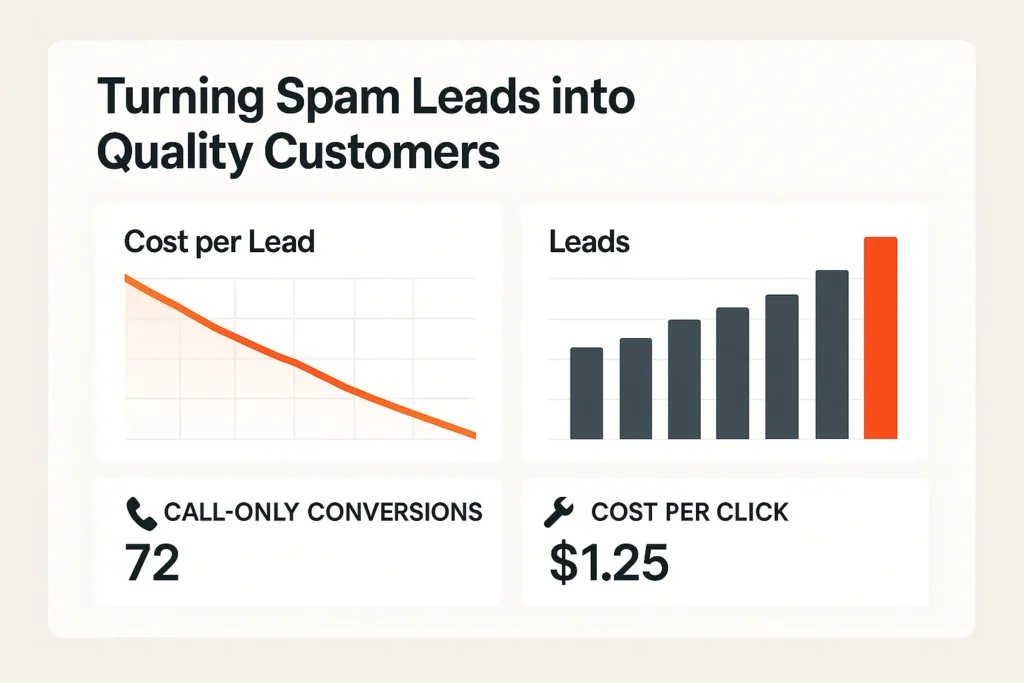
Our client came to us frustrated. While their Google Ads account was generating a steady stream of leads, the majority turned out to be spam or irrelevant inquiries. Even worse, they had no clear way of knowing where their genuine leads were coming from. The client was investing in ads but wasn’t seeing a meaningful return.
The Challenge
- No proper tracking: The client couldn’t see which campaigns or ads were generating real customers.
- Too many spam leads: Their Smart Campaigns were casting the net too wide, attracting junk inquiries.
- Quantity over quality: While lead volume looked good on paper, it wasn’t translating into paying customers.
Our Approach
We focused on fixing the foundation before scaling:
- Implemented conversion tracking
We restructured the tracking setup so the client could finally see which campaigns, ads, and keywords were producing real business results. - Replaced Smart Campaigns with Responsive Search Ads
Smart Campaigns were responsible for the spam surge. By switching to well-structured Responsive Search Campaigns, we gained greater control over targeting, messaging, and keyword intent. - Shifted the focus from cost per lead (CPL) to cost per qualified lead
Instead of chasing the cheapest leads, we optimized for relevance and quality—driving inquiries from people who were actually interested in the client’s services.
The Results
The impact was clear:
- Before
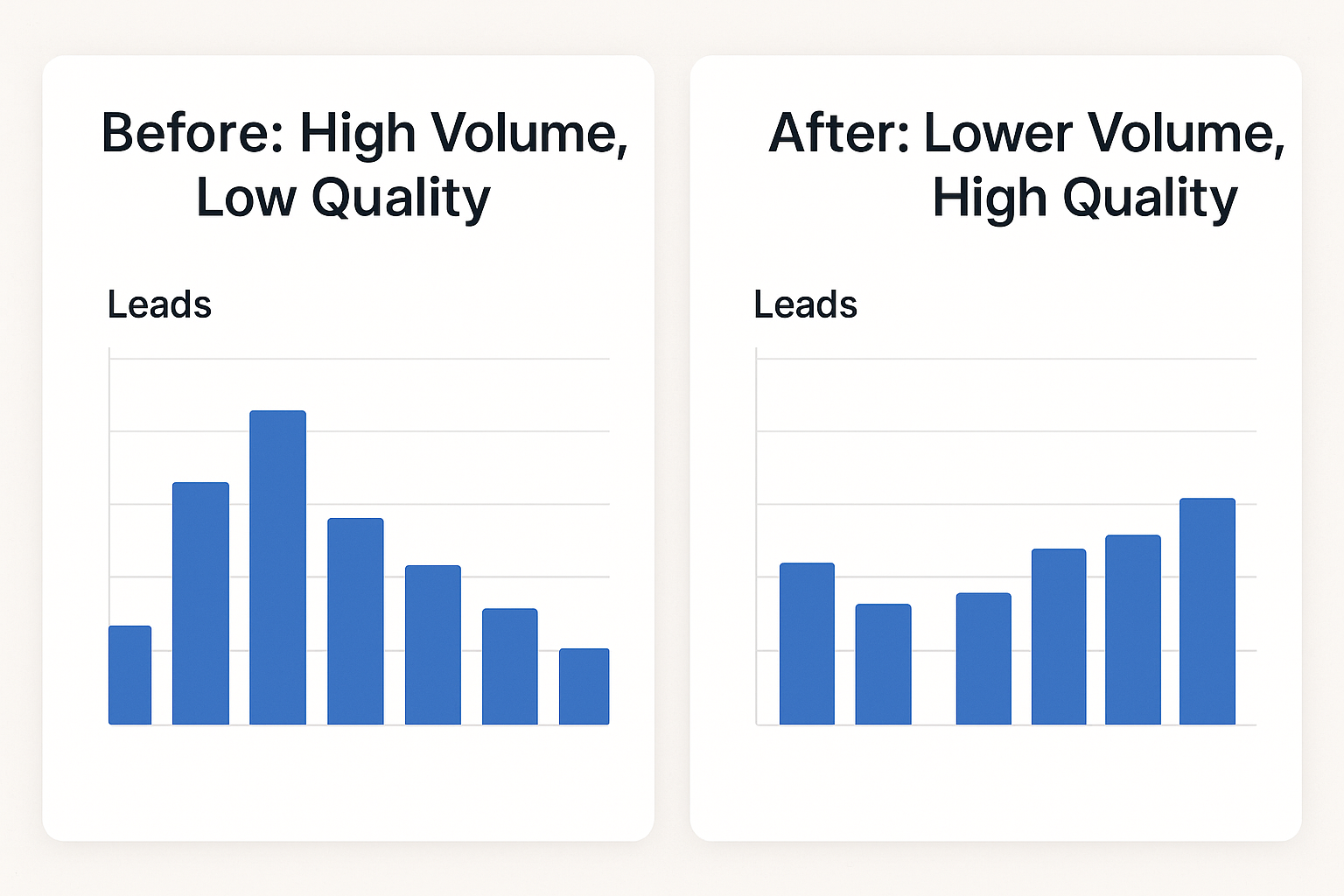
- 60–70% of leads were spam or irrelevant.
- Client had no visibility on which ads drove real customers.
- Low CPL, but poor ROI.
- 60–70% of leads were spam or irrelevant.
- After
- Spam leads dropped dramatically, with most inquiries now relevant.
- Full visibility into which campaigns and keywords generated paying customers.
- CPL increased, but cost per qualified lead decreased — delivering more value for every advertising dollar.
- Spam leads dropped dramatically, with most inquiries now relevant.
Key Takeaways
- Lead volume is not the same as lead quality.
- Smart Campaigns prioritize quantity, but Responsive Search Campaigns allow you to focus on relevance and intent.
- Proper conversion tracking is essential to separate real opportunities from noise.
- Businesses should measure cost per qualified lead — the metric that truly impacts growth.
Conclusion
By restructuring the client’s Google Ads strategy, we transformed their campaigns from a source of spam into a reliable channel for quality customers. The shift from chasing cheap leads to focusing on qualified ones delivered measurable ROI and gave the client confidence in their marketing investment.